 Mei Shen STEEL
1 / 2
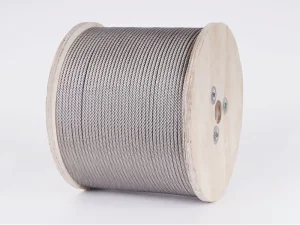
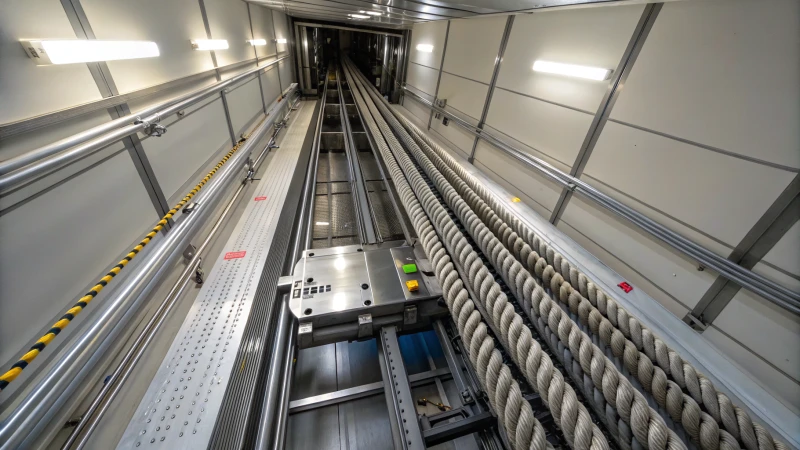
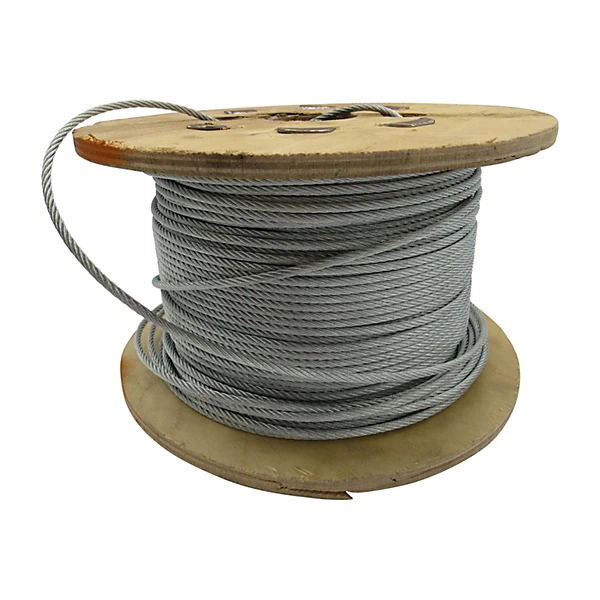
Elevator wire rope is a critical load-bearing component designed to suspend the elevator car and counterweight. It facilitates movement through friction with the traction wheel, ensuring safe and efficient vertical transportation.
Supports the entire weight of the car, load, counterweight, and the rope itself.
Transmits power via friction with the traction wheel to drive the vertical movement.
Designed as a wearing part that withstands high specific pressure, bending, and friction.

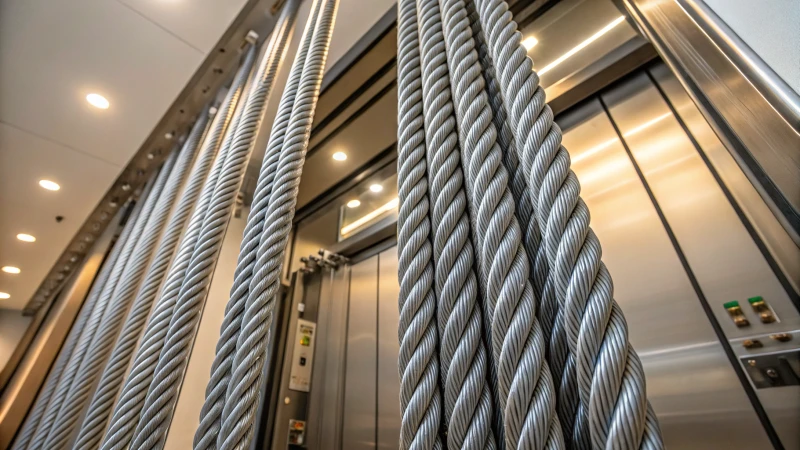
High tensile strength, flexibility for repeated bending, and superior wear resistance in rope grooves.
Suspension ropes (8x19S or 6x19S), Speed governor ropes, and Compensation wire ropes.
| Nominal Diameter (mm) | Approx. Weight (kg/100m) | Minimum Breaking Load (kN) | ||||||||
|---|---|---|---|---|---|---|---|---|---|---|
| Dual Tensile (1570/1770 MPa) | Single 1570 MPa | Single 1770 MPa | Single 1960 MPa | |||||||
| IWRC | CSC | IWRC | CSC | IWRC | CSC | IWRC | CSC | |||
| IWRC | CSC | kN | kN | kN | kN | kN | kN | kN | kN | |
| 8 | 27.5 | 25.6 | 41.9 | 40.1 | 39.4 | 37.7 | 44.4 | 42.5 | 49.2 | 47.0 |
| 9 | 34.8 | 32.4 | 53.0 | 50.7 | 49.9 | 47.7 | 56.2 | 53.8 | 62.2 | 59.5 |
| 10 | 43.0 | 40.0 | 65.5 | 62.6 | 61.5 | 58.9 | 69.4 | 66.4 | 76.8 | 73.5 |
| 12 | 61.9 | 57.6 | 94.3 | 90.2 | 88.6 | 84.8 | 99.9 | 95.6 | 111 | 106 |
| 13 | 72.7 | 67.6 | 111 | 106 | 104 | 99.5 | 117 | 112 | 130 | 124 |
| 16 | 110 | 102 | 168 | 160 | 158 | 151 | 178 | 170 | 197 | 188 |
| 20 | 178 | 160 | 262 | 251 | 246 | 236 | 278 | 266 | 307 | 294 |
| Steel Wire Rope Diameter Allowable Tolerance | |
|---|---|
| Zero Load | With Load (10% of Fmin) |
| Max value: 3% (< 10mm) | Min value: -1% |
| Max value: 2% (> 10mm) | Min value: -1% (> 10mm) |
Its primary purpose is to suspend the car and counterweight and provide traction to move the elevator system safely through vertical shafts.
Strand count affects the balance between flexibility and wear resistance. 8-strand ropes are more flexible, while 6-strand ropes typically offer better resistance to surface wear.
The core supports the outer strands. Fiber cores add flexibility and help store lubricant, while steel cores (IWRC/CSC) provide higher strength and better resistance to crushing.
IWRC stands for Independent Wire Rope Core, providing maximum strength. CSC stands for Composite Steel Core, which is designed for specific structural performance needs in elevator applications.
Tolerance is measured under two conditions: Zero Load (where a slight positive increase is allowed) and With Load (typically 10% of minimum breaking force, where a small negative tolerance is allowed).
It is a specific type of rope used to connect the elevator's speed governor to the car safety gear, ensuring the elevator stops if it exceeds a predetermined speed.