Hositing Steel Wire Rope
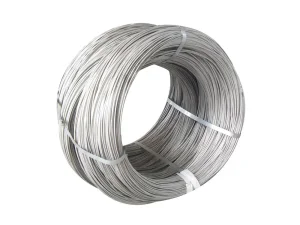
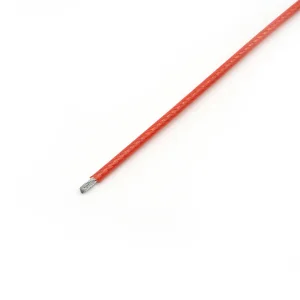
Lifting Wire rope is a vital load-bearing and traction component in lifting machinery. Its main function is to lift, pull, tighten and carry heavy objects.
⚙️
Features
- ✓ Compaction: -
- ✓ Rope core: IWRC
- ✓ Strength grade: 1770Mpa / 1960Mpa / 2160Mpa
- ✓ Twist type: Same direction or alternating twist
- ✓ Twist direction: RH or LH
- ✓ Surface: Smooth or galvanized
⭐
Advantages
- ✓ Applicable and stable structure
- ✓ Fully lubricated during production
- ✓ High load-bearing capacity
- ✓ Excellent wear resistance
Applications
🏗️ Engineering Crane
🚢 Port Crane
🏭 Industrial Crane
🌊 Offshore Crane
🚜 Winch
⛏️ Drilling Platform
Scrap Standards & Maintenance
When should wire ropes be scrapped?
A wire rope should be scrapped if it meets any of the following conditions:
- Broken wires exceed 10% of total wires in one twist.
- Outer wire wear exceeds 40% of original diameter.
- Diameter is reduced by 7% or more.
- The entire strand is broken or fiber core is exposed.
- Severe cage-like deformation or hardening occurs.
Key Points for Replacement
1. Strict Specifications: Qualified original design models, diameters, and nominal tensile strength must be used to ensure service life.
2. Diameter Matching: If the diameter differs, the total breaking force must equal the original. Diameter difference should not exceed 1mm (for original <20mm) or 1.5mm (for original >20mm).
3. Anti-Knotting: Avoid knots during winding. Knotted ropes are highly prone to breaking. Connecting two ropes in the lifting mechanism is forbidden.
35(W)x7 Specification Table
| 10 | 0.454 | 63.8 | 70.6 |
| 11 | 0.549 | 77.1 | 85.4 |
| 12 | 0.654 | 92.1 | 102 |
| 13 | 0.767 | 108 | 119 |
| 14 | 0.890 | 125 | 138 |
| 15 | 1.025 | 145 | 160 |
| 16 | 1.160 | 164 | 181 |
| 18 | 1.470 | 207 | 229 |
| 19 | 1.645 | 231 | 256 |
| 20 | 1.820 | 255 | 282 |
| 21 | 2.010 | 282 | 312 |
| 22 | 2.200 | 309 | 342 |
| 24 | 2.620 | 367 | 406 |
| 26 | 3.070 | 431 | 477 |
| 28 | 3.560 | 500 | 553 |
| 30 | 4.105 | 576 | 638 |
| 32 | 4.650 | 653 | 723 |
| 34 | 5.265 | 740 | 819 |
| 36 | 5.880 | 826 | 914 |
| 38 | 6.560 | 921 | 1020 |
| 40 | 7.260 | 1021 | 1130 |
Frequently Asked Questions (FAQ)
What are the primary applications for 35(W)x7 steel wire ropes?
These wire ropes are ideal for heavy-duty lifting equipment including engineering cranes, port cranes, industrial cranes, offshore platforms, and various winch systems.
How often should crane wire ropes be inspected for scrapping?
Regular inspections are vital. A rope must be scrapped if broken wires exceed 10% of the total in one twist, if diameter reduces by 7%, or if outer wire wear exceeds 40%.
What strength grades are available for these hoisting ropes?
We offer multiple high-tensile strength grades including 1770Mpa, 1960Mpa, and 2160Mpa to suit different lifting requirements and safety standards.
Why is lubrication important during the production of wire ropes?
Full lubrication during production reduces internal friction between strands, prevents corrosion, and significantly extends the service life of the wire rope under heavy load conditions.
Can I use a wire rope with a different diameter than the original design?
It is recommended to use the original design diameter. If a difference is necessary, it must not exceed 1mm for ropes under 20mm, and the total breaking force must match the original specifications.
What is the significance of the IWRC rope core?
IWRC (Independent Wire Rope Core) provides better support to the outer strands, maintains the rope's shape under heavy pressure, and offers higher overall strength compared to fiber cores.
 Mei Shen STEEL