When it comes to selecting the best Crane Ceiling Rope for your project, it's crucial to understand the various options available. A quality crane ceiling rope provides not only safety but also durability. With different materials and designs, finding the right one can feel overwhelming.
Many factors contribute to choosing the perfect rope. Load capacity, environment, and intended use all play a significant role. Identifying your project's specific needs is essential. You want a rope that withstands wear and tear, but also offers flexibility.
However, not all solutions are perfect. Some ropes may fray or lose strength over time. It’s vital to regularly assess your crane ceiling rope for any signs of damage or weakness. Reflecting on past experiences can help ensure safer and more efficient use. The right choice involves careful consideration and ongoing attention to detail.
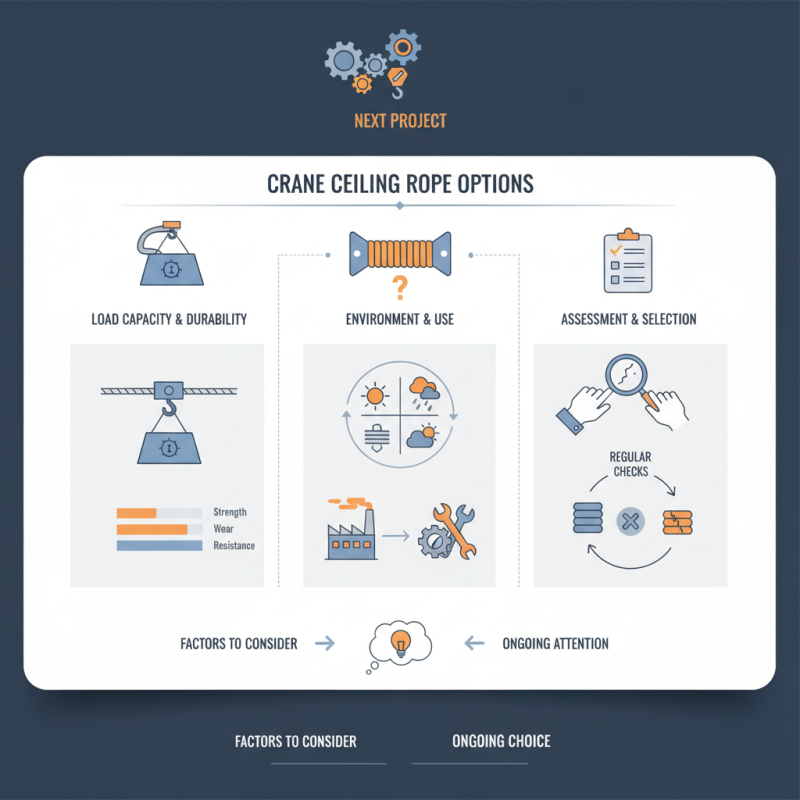
Crane ceiling ropes serve a critical role in various projects, especially in construction and industrial settings. They are used to lift and move heavy materials safely. The quality of these ropes directly affects the efficiency and safety of lifting operations. When selecting ceiling ropes, factors like weight capacity, durability, and environmental conditions should be considered.
One often overlooked aspect is the installation process. Improper installation can lead to accidents or equipment damage. Ensuring your crane ceiling ropes are tensioned correctly is vital. Regular inspections are also necessary to identify wear and tear. This proactive approach can prevent serious incidents down the line.
Choosing the right crane ceiling ropes can be challenging. It's essential to strike a balance between price and quality. While cheaper options may save money upfront, they might lead to more substantial costs later due to accidents or replacement needs. Always consider the long-term implications of your choice. Reflecting on past experiences can guide better decisions in future projects.
| Rope Type | Material | Load Capacity (lbs) | Length Options | Applications |
|---|---|---|---|---|
| Polyester Rope | Synthetic Fiber | 2000 | 50 ft, 100 ft | Construction, Lifting |
| Nylon Rope | Synthetic Fiber | 2500 | 100 ft, 150 ft | Marine, General Purpose |
| Wire Rope | Steel | 4000 | 50 ft, 200 ft | Heavy Lifting, Construction |
| Polypropylene Rope | Synthetic Fiber | 1800 | 100 ft, 300 ft | Light Duty, Boating |
| Manila Rope | Natural Fiber | 1600 | 50 ft, 100 ft | Decoration, Landscaping |
When selecting crane ceiling ropes, the choice of material is crucial. Three common types of materials are steel, synthetic fibers, and hybrid options. Steel ropes are known for their durability and high tensile strength. However, they can be heavy and susceptible to corrosion in harsh environments. Synthetic fibers, like nylon or polyester, are lighter and offer excellent resistance to moisture and UV rays. Yet, they may not handle heavy loads as effectively as steel. Hybrid options aim to combine the strengths of both materials, providing versatility and weight reduction.
According to industry reports, around 65% of construction projects prefer synthetic ropes due to their flexibility and ease of installation. However, users often overlook the importance of load capacity ratings. A rope's specification can significantly affect safety and performance. It’s important to check these ratings to ensure they meet project requirements.
Tip: Regularly inspect your crane ceiling ropes for wear and tear. Even minor frays can lead to failures. Also, consider the environmental factors that may affect the rope’s longevity. Always consult reliable resources and guidelines for the best practices in selection and maintenance.
When selecting crane ceiling ropes for your project, it's crucial to consider several factors. The rope's material impacts its strength, durability, and resistance to environmental elements. Options like nylon and polyester offer unique benefits. Nylon is known for its elasticity, which can absorb shock loads effectively. On the other hand, polyester is more UV resistant, making it suitable for outdoor applications.
Another factor is the rope's diameter. A thicker rope typically provides greater strength, but it may also add weight. Ensure that the diameter aligns with the crane's specifications. Weight limits and load capacities must be carefully assessed. If the rope is too thin for its intended load, failure could occur, leading to potential harm or damage.
Additionally, consider the environment where the rope will be used. Indoor settings may have different requirements compared to outdoor applications. Factors like moisture, temperature, and exposure to chemicals can influence the longevity of the rope. Analyze these conditions to choose the most suitable option for your needs. Investing time in this decision ensures better performance and safety during your project.
When choosing crane ceiling ropes, it's essential to consider quality and safety. Materials matter significantly. Look for options made of durable synthetic fibers or high-strength steel. These materials offer resilience and can handle substantial weight. You may find various lengths and diameters, catering to different project needs.
Some brands stand out due to their expertise in the field. Their products often come with safety certifications and user-friendly designs. Users appreciate ease of installation and maintenance. A well-designed rope can significantly enhance the efficiency of your projects. However, not all options perform equally. Some ropes may fray or weaken over time, raising concerns about reliability.
It's crucial to read reviews and user feedback. This can provide insights into real-world performance. Some users might encounter issues with specific brands or products. Reflecting on these experiences can inform a better choice. Do thorough research before making a decision. Finding the right product may take effort, but the benefits are worth it.
When installing crane ceiling ropes, maintenance is key. Regular inspections ensure ropes remain in peak condition. According to a report by the International Association of Amusement Parks and Attractions, 30% of crane failures stem from inadequate maintenance. Regularly checking for wear and tear can catch problems before they escalate.
Cleaning is essential to prevent corrosion. Dust and debris can build up, weakening the material over time. Industry guidelines suggest using a soft cloth to gently wipe down the ropes. Additionally, lubricating the ropes helps reduce friction. This small step can significantly extend the lifespan of your setup.
Pay attention to environmental factors, too. Excessive heat or moisture can damage the integrity of the ropes. A study by the American Society of Mechanical Engineers indicates that ropes exposed to harsh conditions may lose about 25% of their strength. Proper storage and protection can mitigate these risks. Always reflect on current practices. Are you doing enough to ensure longevity?
: They help lift and move heavy materials safely in construction and industrial settings.
Quality directly impacts efficiency and safety during lifting operations, affecting overall project success.
Focus on weight capacity, durability, and environmental conditions for optimal performance.
Improper installation can lead to accidents or damage, so correct tensioning is crucial.
Regular inspections are necessary to identify wear and tear before serious issues arise.
Cheaper ropes may save money initially, but they can lead to higher costs from accidents later.
It ensures ropes remain in peak condition, preventing failures due to inadequate care.
Use a soft cloth to wipe down ropes, preventing corrosion from dust and debris buildup.
Excessive heat or moisture can weaken ropes, potentially reducing their strength by 25%.
Reflect on your methods and consider if they adequately ensure the longevity of your equipment.
Crane ceiling ropes play a crucial role in various projects, providing the necessary support for lifting and maneuvering heavy materials safely. Understanding the purpose and functionality of these ropes is essential for ensuring efficiency and safety in any lifting operation. There are various materials used for crane ceiling ropes, each offering different properties such as strength, flexibility, and resistance to environmental factors, which need to be considered when making a choice.
When selecting crane ceiling ropes, factors like load capacity, durability, and environmental conditions should guide your decision. Additionally, well-known products in the market provide a range of options to meet diverse project requirements. To maximize the longevity of crane ceiling ropes, regular maintenance practices, including inspections and proper storage, are vital. By following these guidelines, you can ensure the effectiveness and safety of your lifting operations with crane ceiling ropes.

Mei Shen STEEL